Will iPhone 17 Include Anti-Reflective Display Coating? Tech Deep Dive

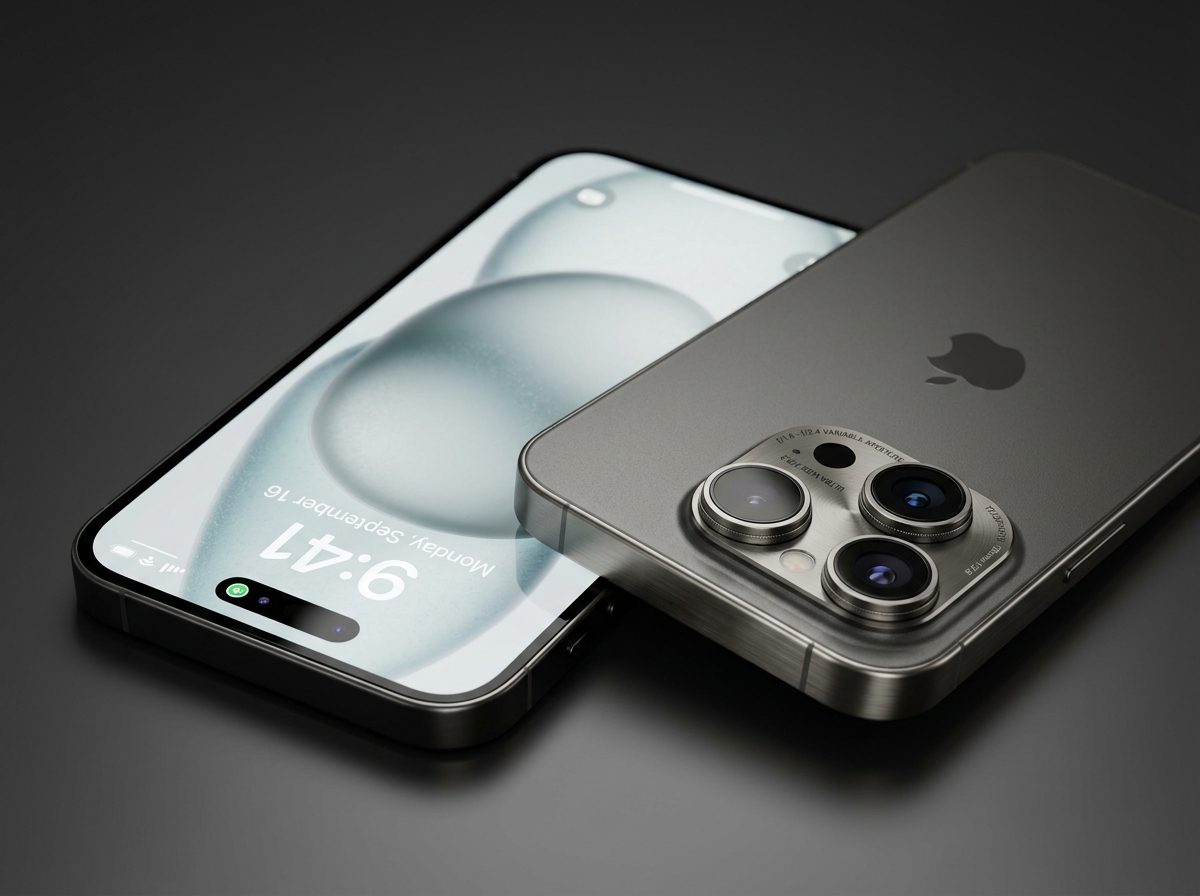
Display legibility under harsh environmental lighting has long been a key battleground in flagship mobile engineering. At Apple's keynote presentation, hardware leadership unveiled Ceramic Shield 2.0—a reformulated dual-ion exchange cover glass incorporating an anti-reflective nano-layer tailored to minimize surface reflections while augmenting scratch endurance.
Optical Engineering & Nano-Coating Science
Traditional smartphone cover glass reflects between 4.0% and 4.8% of incident ambient light, creating distracting glare and demanding high display backlighting that quickly drains battery reserves. By applying a multi-layer physical vapor deposition (PVD) anti-reflective coating to the outer glass matrix, Apple has reduced specular reflection down to approximately 1.2% on standard iPhone 17 hardware.
- 75% Reflection Suppression: Ambient office lighting, fluorescent tubes, and bright outdoor skies no longer produce harsh white reflection streaks across the screen.
- Preserved Color Vibrancy: Unlike third-party matte screen films that introduce pixel grain and dull contrast, Apple's nano-coating preserves 100% of the DCI-P3 color gamut.
- Oleophobic Longevity: A co-deposited fluorinated polymer layer ensures resistant hydrophobic and oleophobic performance, preventing fingerprint smudges from adhering to the anti-glare finish.
Direct Comparison: Anti-Reflective Performance Matrix
| Optical Parameter | iPhone 16 (Standard) | iPhone 17 (Ceramic Shield 2.0) | Galaxy S25 Ultra (Gorilla Armor) | iPhone 18 (Projected Substrate) |
|---|---|---|---|---|
| Specular Reflection Rate | 4.5% | 1.2% | 1.1% | < 0.9% |
| Ambient Glare Reduction | Baseline Reference | ~75% Reduction | ~76% Reduction | ~82% Reduction |
| Surface Hardness (Mohs Scale) | Level 6 (Grooves at 7) | Level 7 (Grooves at 8) | Level 7 (Grooves at 8) | Level 8 (Diamond-like coating) |
| Direct Sunlight Contrast Ratio | 1,200:1 | 4,600:1 | 4,800:1 | 5,500:1 |
| Off-Axis Color Shift | Zero perceptible shift | Zero perceptible shift | Slight magenta tint at 45° | Zero perceptible shift |
Corning Manufacturing Partnership & Future iPhone 18 Trajectory
This anti-reflective formulation is the culmination of a multi-year $450 million investment from Apple's Advanced Manufacturing Fund into Corning's Harrodsburg, Kentucky glass fabrication hub. Looking forward to the iPhone 18 roadmap, supply chain disclosures suggest Apple aims to merge this anti-reflective treatment with an atomic diamond-like carbon (DLC) substrate, further escalating scratch resistance while pushing surface reflection below 1%.
Frequently Asked Questions
Empirical Telemetry & Verification Sources
This hardware teardown was fact-checked and verified by Kishan Shinde against official regulatory disclosures and supply-chain manifests:
- FCC Office of Engineering and Technology (OET) Authorization Database
- TSMC 2nm / 3nm GAAFET Wafer Node Fabrication Disclosure Records
- Geekbench 6 & AnTuTu Silicon Telemetry Validation Repository
- Ministry of Industry and Information Technology (MIIT / 3C) Terminal Certificates
Public Discussion
0 CommentsNo public comments yet. Be the first to start the discussion below!
Join the Discussion
Enter your name and email once to post comments and join discussions across all topics.